 713-527-4400
 24x7 Available


Medically reviewed by the Rice Emergency Room Medical Team

Medically reviewed byDr. Amir Zegar, DOBoard-Certified Emergency Medicine Physician | Medical Director
A broken finger occurs when there is a fracture or break in a bone. At the same time, a sprain can occur if a ligament, a tissue that connects bones, is stretched or torn.
Both injuries can be painful and make it hard to know if it is sprained or broken. This article will help you identify which kind of injury you have accurately, and the associated care needed.
Let’s take a look at the symptoms, and treatment options for broken fingers and sprains.
Causes of Finger Fractures and Sprains
Finger fractures are often the result of injuries sustained on the job and during everyday life. There are a variety of scenarios that can cause a broken finger, including:
- Being struck by a fast-moving object, such as a baseball
- Using the hand to break a fall
- Accidentally trapping the finger in a door or drawer
- Trauma sustained in a car accident or other impact event
- Using tools such as drills, power saws, or hammers
A sprained finger is typically caused by an injury that bends the finger unnaturally. such as hyperextension. We often see this type of injury in athletes young and old, but they also happen on the job, and due to falls and accidents.
Symptoms of a sprained finger include pain or stiffness in the affected finger. Eventually, you will also notice swelling, and tenderness in the joint. If you have strained your finger, a medical professional can help you with treatment and verify that it is not a broken finger. This will ensure you heal properly and quickly. Ensuring you have less downtime at your job, or sport and at home.
Treating a Broken Finger
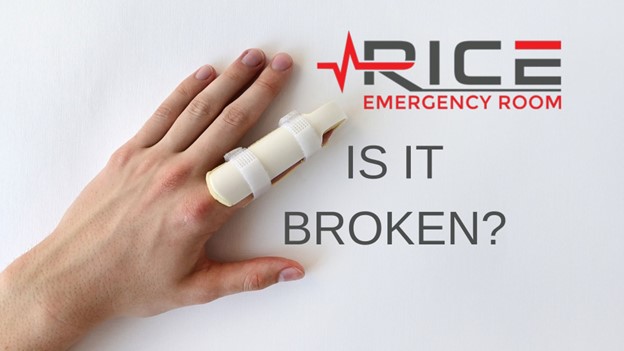
Treatment for a broken finger will depend on the location and severity of the fracture, including the stability at the site where the injury occurred. In the case of a stable fracture, a splint or tape may be used to keep the finger straight and protected while it heals.
A splint is typically worn for three to four weeks. After that, the individual should avoid strenuous activity for an additional two weeks. Physical therapy can also help regain full motion in the finger long-term.
A splint is often used for unstable fractures in order to immobilize the finger after the fracture fragments have been re-aligned. This procedure is usually performed under local anesthesia, with a numbing solution injected into the nerves at the finger’s base. It is essential to follow the treatment plan prescribed by a healthcare provider to ensure proper healing and avoid complications. (Cleveland Clinic)
How to Treat a Sprained Finger
You can often treat a mild sprain at home using over-the-counter pain medication and the RICE method: Rest, Ice, Compression, and Elevation. Rest the injured finger, apply ice for 15 to 20 minutes, wrap an elastic bandage around the joint, and elevate the hand to reduce swelling, especially in the first few days after the injury.
These steps can reduce pain and swelling and promote healing. It is also a good idea to avoid the activity that caused the sprain while your finger heals. If your symptoms do not improve or worsen, you will need to see a healthcare provider for further treatment.
A broken finger can involve a deformity or visible break in the bone. In contrast, a sprain typically includes swelling and tenderness around the joint.
To receive a proper diagnosis and treatment plan, it is essential to seek medical attention if you suspect you have either of these injuries.
On Site Radiology and Pharmacy
Rice Emergency Room has 24/7 Radiology with X-Rays and fast results. Our goal at Rice Emergency Room is to see you fast, get a suspected broken bone x-rayed quickly, diagnosed and treated in less than an hour.
Our on-site pharmacy will facilitate getting you your first doses of prescribed medication so you can avoid a pharmacy wait and be on your way with your pain in check.
Sources Cited
Cleveland Clinic. “Broken Finger (Finger Fracture): Symptoms, Diagnosis & Treatment.” Cleveland Clinic,
my.clevelandclinic.org/health/diseases/21784-broken-finger.
Cleveland Clinic. “Sprained Finger: Symptoms, Causes and Treatment.” Cleveland Clinic,
WebMD. “Broken Finger.” WebMD, WebMD,
www.webmd.com/a-to-z-guides/broken-finger.